Slip and Fall Accidents in California: When Is a Property Owner Responsible?

Understanding Responsibility After a Fall
Slip and fall accidents can happen in a wide range of settings, including retail stores, restaurants, apartment complexes, office buildings, and public walkways. While some incidents result in minor injuries, others can lead to serious harm such as fractures, head trauma, or long-term mobility issues. Determining when a property owner is legally responsible is a key issue in these cases and often depends on whether reasonable steps were taken to maintain a safe environment.
The Duty of Care Owed by Property Owners
Under California law, property owners and those who control property have a legal duty to maintain reasonably safe conditions for visitors. This duty applies to both residential and commercial properties. It includes an obligation to regularly inspect the premises, repair hazardous conditions, and provide adequate warnings when a danger cannot be immediately corrected. When this duty is breached and an injury occurs, the property owner may be held liable.
Common Conditions That Lead to Slip and Fall Accidents
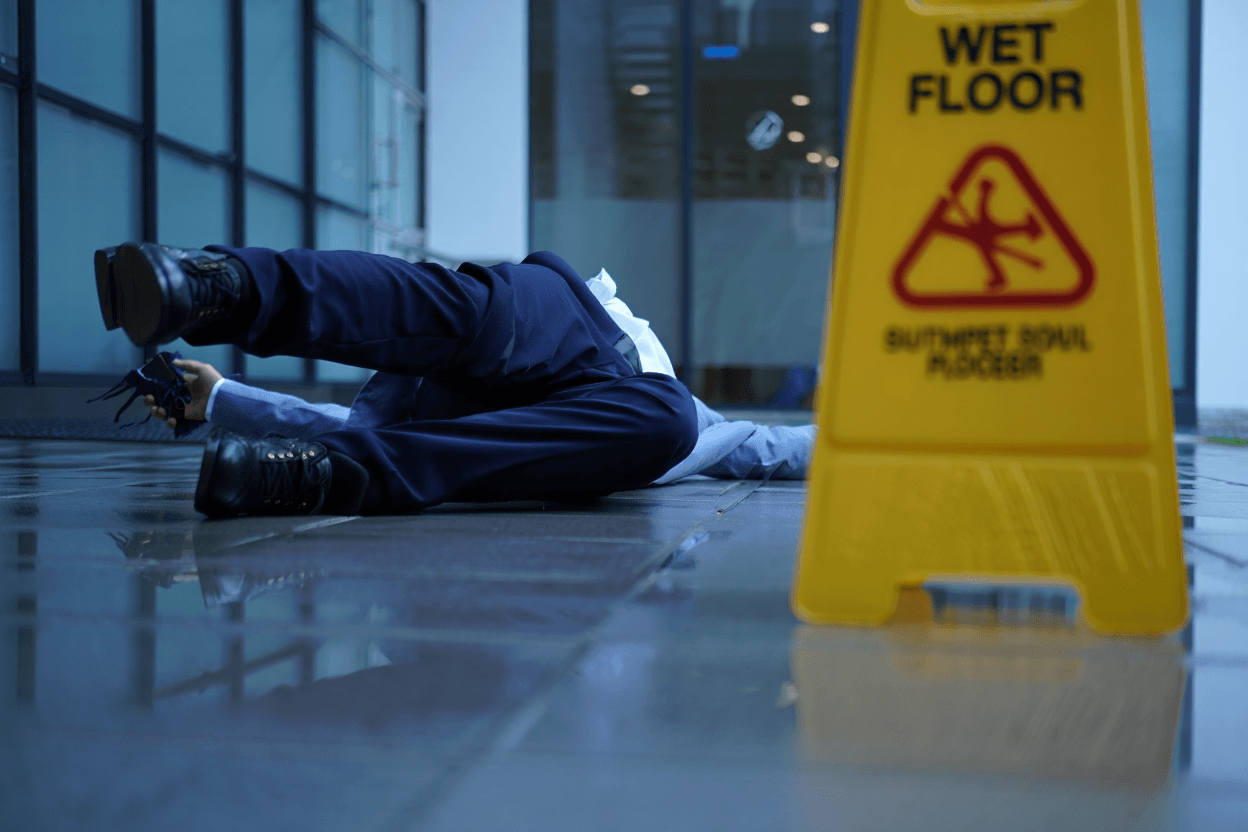
Slip and fall accidents often result from hazardous conditions that could have been prevented with proper maintenance. Wet or slippery floors, uneven surfaces, loose flooring materials, poor lighting, and cluttered walkways are frequent contributors. In many cases, the issue is not just the existence of a hazard, but whether it remained unaddressed for an unreasonable period of time.

The Importance of Notice in Establishing Liability
A central issue in determining responsibility is whether the property owner had notice of the dangerous condition. Actual notice means the owner or manager was aware of the hazard. Constructive notice means the condition existed long enough that it should have been discovered through reasonable inspections. Proving that the responsible party knew or should have known about the hazard is often essential to a successful claim.
Comparative Fault in Slip and Fall Cases
California follows a comparative negligence system, which means that responsibility for an accident may be shared. If an injured person is found partially at fault, such as by failing to pay attention to their surroundings, their compensation may be reduced. Insurance companies frequently rely on this principle to argue that the injured individual bears some responsibility for the fall.
Evidence Used to Prove a Slip and Fall Claim
Establishing liability in a slip and fall case often requires strong supporting evidence. Photographs of the hazard, incident reports, witness statements, maintenance records, and surveillance footage can help demonstrate how the accident occurred and whether the property owner failed to act reasonably. Because conditions can change quickly, timely documentation is especially important.


Types of Compensation Available
Injured individuals may seek compensation for medical expenses, rehabilitation costs, lost wages, and reduced earning capacity. Claims may also include damages for pain and suffering, emotional distress, and long-term disability. The extent of recovery depends on the severity of the injuries and the overall impact on the individual’s life.
When a Property Owner May Be Held Liable
A property owner in California may be held responsible for a slip and fall accident when they fail to maintain safe conditions or address known hazards in a timely manner. However, each case depends on specific facts, including notice, control of the property, and the actions of the injured person. Understanding these legal principles and acting promptly after an accident can play an important role in protecting the right to fair compensation.
Additional Resources
For more information, visit the California Courts Self-Help Guide, the California Department of Consumer Affairs, and the Nolo’s Premises Liability resources.