Hit by a Driver With No Insurance - or Not Enough? Your Uninsured and Underinsured Motorist Rights in California

You did everything right, and the driver who hit you had no insurance - or carried the bare legal minimum that comes nowhere close to covering your injuries. In California, where roughly one in six drivers is uninsured, this happens far more often than people expect. The coverage that protects you in these moments is called uninsured and underinsured motorist coverage, and understanding it can be the difference between a real recovery and an empty judgment.
UM vs. UIM: Two Different Problems
Both coverages live in your own auto policy, and California Insurance Code Section 11580.2 requires insurers to offer them - though you can waive them in writing (many people unknowingly do).
Which one applies has nothing to do with how badly you were hurt - it depends entirely on what the other driver’s coverage looks like on paper.
How Underinsured (UIM) Coverage Actually Pays
UIM is what’s called “difference-in-limits” coverage, and this trips people up. Your UIM only helps if your UIM limit is higher than the at-fault driver’s liability limit, and it is reduced dollar-for-dollar by what the at-fault driver’s insurance pays.
Example: if you carry $250,000 in UIM coverage and the at-fault driver carries the state minimum of $30,000, you can generally collect the $30,000 from them and then up to $220,000 from your own UIM coverage - the difference between the two. If your UIM limit is the same as, or lower than, theirs, UIM may add nothing. That is exactly why your own coverage limits matter so much.
A Few California-Specific Details Worth Knowing
Check Your Coverage Before You Ever Need It
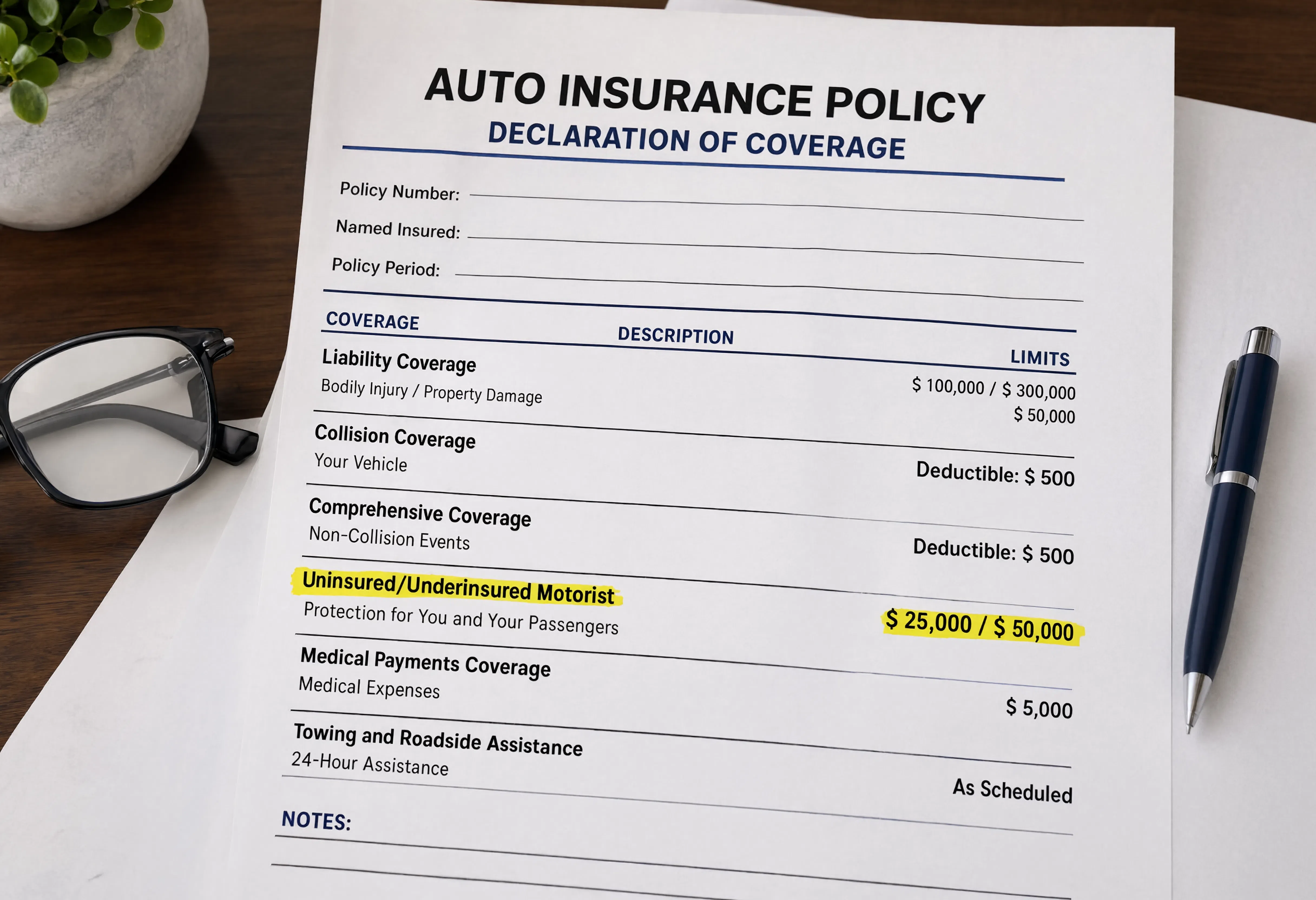
The best time to understand your UM/UIM coverage is before an accident. Pull out your declarations page and look for “Uninsured/Underinsured Motorist” limits. If they are low - or rejected entirely - it is usually inexpensive to increase them, and it is some of the most valuable protection you can buy in a state with this many uninsured drivers.
Hit by an uninsured or underinsured driver? Don’t assume you’re out of options. Pogosyan Law can review your own coverage and the at-fault driver’s, and map out every source of recovery. The consultation is free.
Get a Free Consultation with Pogosyan Law
Car Accident Attorneys in Glendale
California Insurance Code Section 11580.2
California Department of Insurance
Call (818) 243-3900 or email info@pogosyanlaw.com - Glendale, CA.
Disclaimer: This article is general information about California law, not legal advice, and does not create an attorney-client relationship. Laws change and every case is different - for guidance on your situation, consult a licensed attorney. Past results do not guarantee future outcomes.