California Just Cut Rideshare Insurance: What SB 371 Means If You’re Hurt in an Uber or Lyft
Millions of Californians climb into an Uber or Lyft every week assuming that if something goes wrong, they're well protected. A recent change to state law quietly reduced one of the most important protections rideshare passengers had - and most riders have no idea it happened.
The law is Senate Bill 371, and here's what it changed, why it matters, and how to protect yourself if you're injured in a rideshare.
What SB 371 Changed
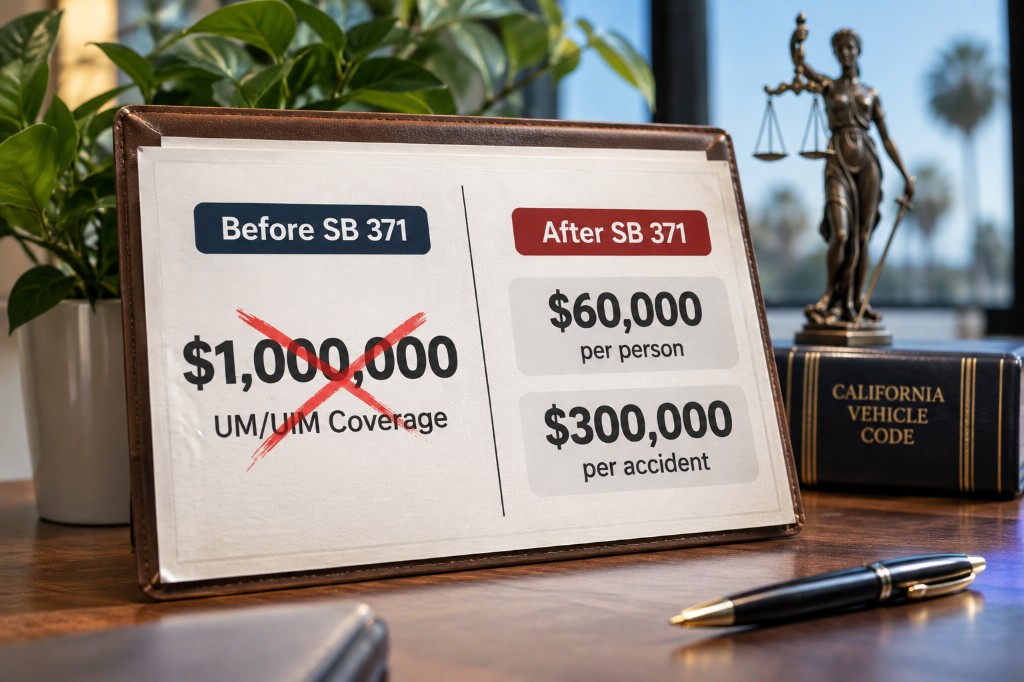
Signed into law in 2025, SB 371 sharply reduced the uninsured/underinsured motorist (UM/UIM) coverage that rideshare companies are required to carry for riders. Previously, that coverage was $1,000,000 per incident. Under SB 371, the required UM/UIM coverage drops to just $60,000 per person and $300,000 per accident. Supporters framed the change as a way to lower rideshare costs for drivers and riders - but it also means far less protection when it's needed most.
Why UM/UIM Coverage Matters So Much
Uninsured/underinsured motorist coverage is the safety net that pays when the driver who caused the crash has no insurance, or nowhere near enough to cover your injuries. With a significant share of California drivers uninsured or underinsured, this coverage is often the difference between a seriously injured passenger being made whole and being left with bills. Cutting it from $1 million to $60,000 per person is a dramatic reduction in that safety net.

What Stayed the Same
Importantly, the change applies to the UM/UIM portion of coverage. Rideshare companies are still required to carry $1,000,000 in third-party liability coverage while a driver is on an active trip. So if your rideshare driver causes the crash, that larger coverage generally still applies. The reduction specifically affects situations where another driver - one who is uninsured or underinsured - causes your injuries.
What It Means If You're Hurt in a Rideshare
The practical takeaway: you can no longer assume a rideshare's UM/UIM coverage will be enough if you're badly hurt by an uninsured driver. That makes your own auto policy's UM/UIM coverage more important than ever, and it makes early, careful handling of a rideshare claim - identifying every policy that may apply - essential to protecting your recovery.
How to Protect Yourself
A few steps go a long way: carry robust UM/UIM coverage on your own auto policy (and don't waive it), and after any rideshare crash, document everything - screenshots of your trip, the driver, the app status, the scene - and get legal advice before accepting any insurance offer. The rules are now more complicated, and the coverage smaller, so knowing your options matters.
Injured in an Uber or Lyft and unsure what coverage applies after SB 371? Pogosyan Law offers a free consultation to identify every available policy and fight for the full compensation you're owed.
Get a Free Consultation with Pogosyan Law
Personal Injury Practice Areas
Free AI Case Value Insight Tool
Website by Inspirovate Creatives
California Legislature - SB 371 (Official Bill)
CalMatters - SB 371 Bill Tracker
Call (818) 243-3900 or email info@pogosyanlaw.com - Glendale, CA, representing injured clients across California since 1999.
Disclaimer: This article is general information about California law, not legal advice, and does not create an attorney-client relationship. Laws change and every case is different - for guidance on your situation, consult a licensed attorney. Past results do not guarantee future outcomes.